
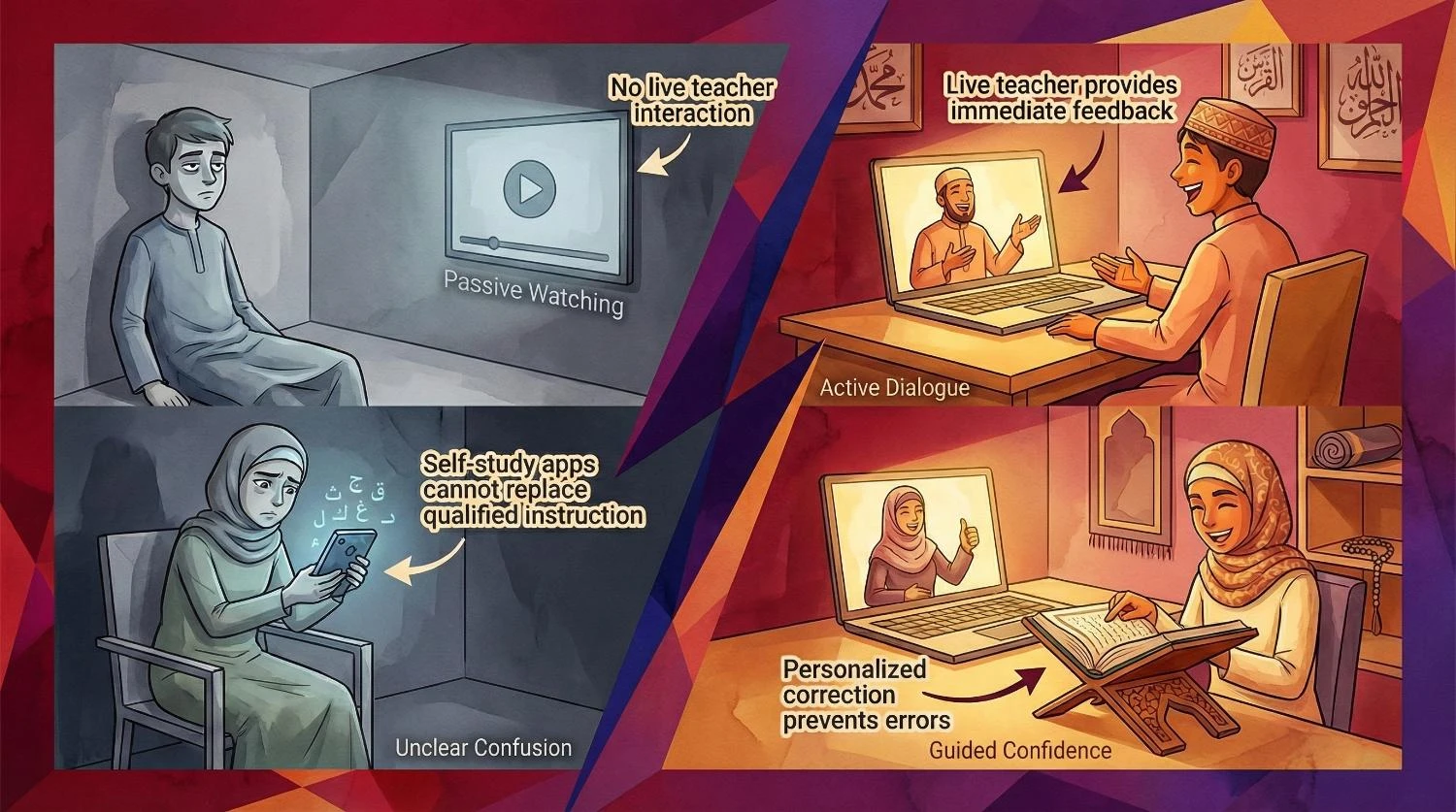
Interactive live sessions vs. passive learning: The key to maintaining a child’s focus.
Teaching Quran to Children with Short Attention Spans: 5 Effective Strategies
As a parent, you want nothing more than to see your child build a deep, lasting connection with the Quran. It is the foundation of our faith and a guiding light for their future. However, we have all been there: you sit down for a study session, you have your books ready, and within five minutes, your child is looking at the ceiling, playing with a toy, or asking, “Are we done yet?”
If this sounds familiar, take a deep breath. You are not alone! It is a common misconception that every child will sit still for an hour of focused learning. The truth is, teaching Quran to children requires an understanding of their developmental stage. Children have naturally shorter attention spans, and their brains are wired for movement and play.
The key to success isn’t forcing them to sit still; it’s about adapting your approach to fit their needs. Here are five effective, field-tested strategies to make your Quran sessions productive and joyful.
1. Break It Down: The Power of Micro-Learning
When teaching Quran to children, one of the biggest mistakes parents make is aiming for long, continuous sessions. A child’s brain is like a sponge, but it can only absorb so much at once before it becomes saturated.
Instead of one 40-minute session, try breaking your lessons into “micro-chunks.” Focus on 10 to 15 minutes of high-quality, intense engagement. You will be surprised at how much more a child can retain when they know the session will be short and sweet. By using a timer, you create a sense of structure. Once the timer goes off, let them take a “brain break”—jump around, get a snack, or play for five minutes—before coming back for another quick segment. This approach reduces frustration and keeps their focus sharp. Think of it as building a habit rather than completing a task; small, daily wins are far better than infrequent, long, and stressful ones.
2. Incorporate Movement into the Lesson
We often associate learning with sitting at a desk, but for many children, physical movement is essential for concentration. If you find your child squirming, don’t interpret it as a lack of interest; interpret it as a need for sensory input.
When you are teaching Quran to children, make it active! If they are learning a specific Surah, let them pace back and forth while they recite. If you are working on Tajweed rules, use hand gestures to signify different sounds or movements. Some parents even find that having their child jump on a mini-trampoline or balance on a yoga ball helps them focus better during recitation. When the body is engaged, the brain is often more attentive. By allowing this movement, you remove the physical barrier that prevents them from focusing on the spiritual message of the Quran.
3. Use Visual and Interactive Aids
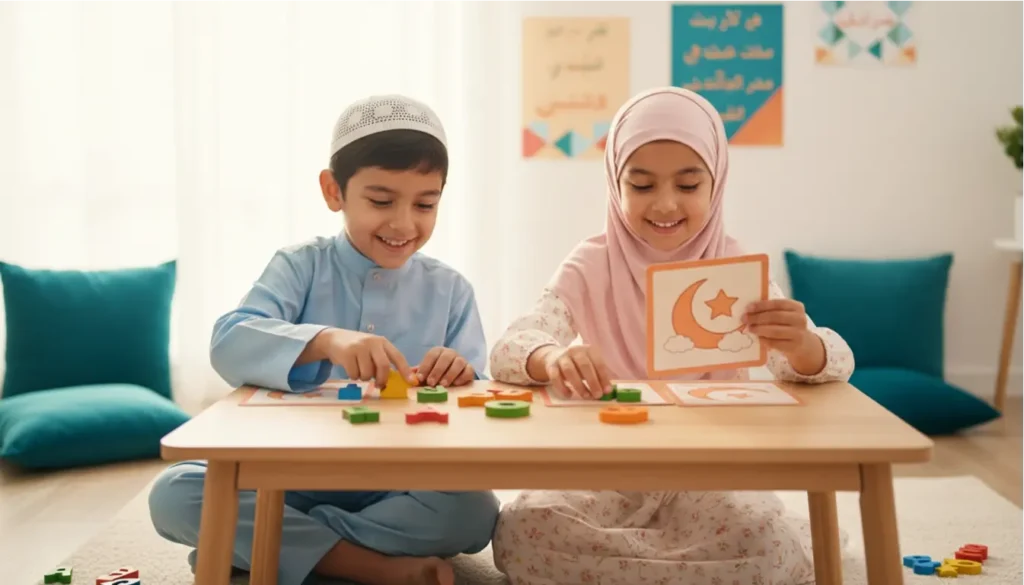
Children are inherently visual learners. Staring at a page of text can be daunting, especially for those just starting their journey. To make the process of teaching Quran to children more engaging, incorporate tools that capture their imagination.
Use color-coded flashcards to help them identify specific words or Tajweed rules. Utilize educational apps that offer interactive games for letter recognition. Even something as simple as a small whiteboard where they can trace Arabic letters with colorful markers can turn a boring task into a creative one. When you transform the abstract text of the Quran into something they can see, touch, and interact with, the learning experience becomes personal and exciting. Visual aids act as a bridge between the physical world and the spiritual lessons they are learning, making the concepts stickier and easier to recall.
4. The Role of Parental Modeling
Children often mirror the enthusiasm—or the anxiety—of their parents. If you approach teaching Quran to children as a chore that you must “get over with,” your child will sense that pressure.
Instead, model the love for the Quran. Let your child see you reading it, listening to it, and finding peace in it. When a child sees that the Quran is a source of joy for their parents, they naturally want to be part of that experience. During your sessions, express excitement about their progress. If you are learning together, be honest when you find a verse difficult, and celebrate together when you finally master it. This “learning together” dynamic removes the teacher-student barrier and replaces it with a partner-in-faith bond.
5. Creating a “Quran Sanctuary” at Home
The environment plays a massive role in concentration. When teaching Quran to children, try to designate a specific space in your home that is used only for Quranic studies.
This could be a small corner with a comfortable rug, a shelf with their favorite Quranic books, and good lighting. When your child steps into this “Quran Sanctuary,” their brain begins to associate that specific space with focus, calm, and connection with Allah. Keep this space free from distractions like tablets, television, or noisy toys. Even for online classes, having this dedicated space helps them mentally prepare for the lesson, knowing that when they sit in that chair, it is time for their beautiful, quiet, and meaningful connection with the Quran.
6. Keep It Consistent but Flexible
Consistency is the backbone of habit-building. If you try to teach the Quran only when you “have time,” your child will not develop the discipline required for long-term progress. However, there is a fine line between consistency and rigidity.
When teaching Quran to children, there will be days when they are tired, hungry, or just not in the mood. On these days, forced instruction will only lead to resentment. Instead of skipping the lesson entirely, pivot to a “low-pressure” version. Listen to a recitation of the Quran together, discuss a short story about a Prophet, or simply review what they already know without adding new content. This maintains the habit of daily Quran engagement without turning the experience into a struggle for authority.
7. Focus on Quality Over Quantity
In our quest to help our children memorize the Quran, we often get caught up in how many pages or Surahs they have completed. But when you are teaching Quran to children with short attention spans, “quality” is the only metric that matters.
If your child spends ten minutes focusing deeply on a single verse, perfecting their pronunciation and understanding its meaning, that is a massive success. Do not push them to move on just to “finish” a chapter. Celebrate the small victories. When they master a difficult sound or memorize a new verse, make a big deal out of it! This positive reinforcement builds their self-confidence and motivates them to return to the Quran with enthusiasm the next day.
The Role of Professional Support
Sometimes, even with the best intentions and strategies, children need a different dynamic to stay focused. This is where professional, interactive online education can make all the difference. At Alnoor Academy, we specialize in teaching Quran to children through methods designed to engage their minds and hearts.
Our instructors understand the challenges of short attention spans and use modern, interactive teaching styles that turn online sessions into a journey of discovery rather than a lecture. We believe that when a child enjoys their learning environment, they become self-motivated, turning a previously daunting task into a rewarding, lifelong achievement.
Conclusion
Teaching Quran to children is a marathon, not a sprint. It requires patience, creativity, and a deep understanding of your child’s unique personality. By breaking down lessons, incorporating movement, using visuals, being a positive role model, creating a dedicated space, staying flexible, and focusing on quality, you can help your child foster a deep, loving relationship with the Quran that will stay with them for a lifetime.
Don’t be discouraged by the bumps in the road. Every minute you spend helping your child connect with the Quran is an investment in their Akhirah and their character.
Are you ready to see how your child can thrive in a supportive, interactive environment? We invite you to book a trial session at Alnoor Academy today. Let us partner with you in nurturing your child’s faith with care and expertise.