

In an age where children are constantly exposed to diverse digital and social influences, helping them develop a strong Islamic identity can feel like a daunting journey for parents. We live in a fast-paced world that often prioritizes material success over spiritual depth. As parents, our ultimate goal is not just to teach our children rituals or empty traditions, but to help them internalize the beauty, ethics, and profound peace that Islam offers. At Alnoor Academy, we believe that nurturing faith is about creating a connection that feels both relevant to their modern lives and deeply rooted in their hearts.
Building a solid Islamic identity is a gradual, intentional process. It is the cumulative effect of small, consistent choices made daily. Here are 5 practical, deeply impactful ways to nurture your child’s faith and build a foundation that lasts a lifetime.
1. Make Quranic Connection a Daily Habit
The Quran is the heartbeat of every Muslim’s life. It is the source of guidance and the mirror in which a child sees the greatness of their Creator. However, the common mistake many parents make is treating the Quran as a chore or a purely academic subject to be checked off a list.
Instead, integrate it into your daily routine in a way that sparks curiosity. Whether it is reading a short Surah together during breakfast, listening to a beautiful recitation in the car, or discussing the heroic stories of the Prophets, consistency is the bridge between a child and their faith. By starting with foundational programs like Noorani Qaida, children build the essential mechanics to read the Quran independently. When a child moves from “needing help” to “reading on their own,” their confidence grows, turning a previously daunting task into a rewarding, lifelong achievement.
consistency is the bridge between a child and their faith. By starting with foundational programs like Noorani Qaida, children build the essential mechanics to read the Quran independently. Using resources like Quran.com to listen to recitations or read translations together can make this daily habit more interactive and engaging. When a child moves from ‘needing help’ to ‘reading on their own,’ their confidence grows, turning a previously daunting task into a rewarding, lifelong achievement.
2. Model Islamic Ethics in Daily Life
Children are master observers. They learn far more from your actions than from your lectures. If you tell them about the importance of honesty but they see you being dishonest in a minor situation, the contradiction will confuse them.
Your child’s understanding of Islam is shaped by how you handle stress, how you react to a mistake, and how you express gratitude during difficult times. When you model patience in traffic, honesty in business, and kindness to neighbors, you are teaching them that Islam is not something kept inside a prayer rug—it is a living, breathing guide for how to be a good human being. By living these values, you anchor their Islamic identity in real-world actions, not just theory.
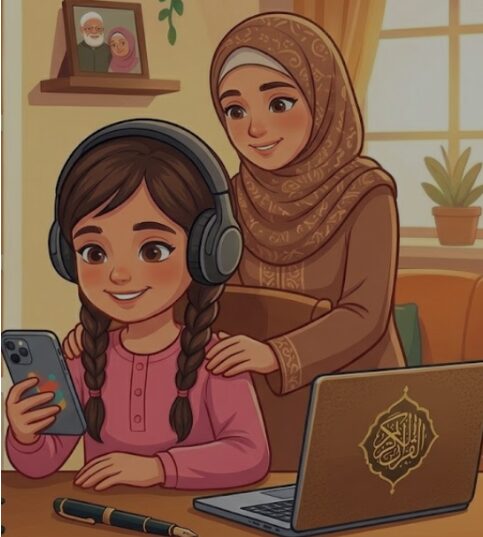
Nurturing a child’s Islamic identity through consistent, joyful Quranic learning at home.
3. Create a “Safe Space” for Questions
As children grow and interact with the world, they will naturally have questions about their faith. This is a sign of a healthy, inquisitive mind! Encourage this curiosity. When your child asks “Why?” about a specific religious practice, treat it as a golden opportunity for bonding.
If you don’t know the answer, say “Let’s find out together.” By providing honest, age-appropriate answers, you ensure that they feel comfortable turning to you—and to their faith—whenever they face doubts. A child who feels safe asking questions will never feel the need to look for answers in the wrong places, which is crucial for preserving a healthy Islamic identity throughout their teenage years.
treat it as a golden opportunity for bonding rather than a challenge to your authority. If you don’t know the answer, say ‘Let’s find out together.’ According to experts at HealthyChildren.org, maintaining an open line of communication is essential for your child’s emotional growth. By providing honest, age-appropriate answers, you ensure that they feel comfortable turning to you—and to their faith—whenever they face doubts or confusion.
4. Foster a Sense of Community
Faith is easier to maintain when you are part of a supportive tribe. A child who feels isolated in their identity may struggle to stay motivated. Encourage your child to participate in activities where they can interact with other Muslim children who share their values.
Whether it is through an engaging online class at Alnoor Academy where they meet peers from different countries, a local youth group, or family gatherings, being part of a community helps children feel proud and secure in their Islamic identity. Seeing other children their age striving for the same goals validates their own journey and makes the path of faith feel natural, accessible, and joyful.
5. Celebrate Milestones with Joy
Never underestimate the power of celebration in creating a positive psychological association with faith. Whether your child has mastered a difficult Arabic letter, finished their first chapter of the Quran, or demonstrated an act of kindness, acknowledge it with enthusiasm.
Creating positive memories around their religious growth makes them associate their faith with happiness and pride rather than pressure. These small milestones, when celebrated, become the anchors that hold them firm when they face the inevitable challenges of growing up.
Why a Balanced Foundation Matters for Islamic Identity
A strong Islamic identity is built on a delicate balance of spiritual, intellectual, and emotional growth. At Alnoor Academy, we specialize in providing that balance. We understand that non-native speakers face unique hurdles in connecting with the Quran. By combining traditional, time-tested Quranic teaching methods with modern, interactive digital tools, we help children navigate the complexities of the modern world while staying firmly rooted in their faith.
Our approach is designed to ensure that every student feels seen, heard, and empowered. When learning becomes an engaging, personalized experience rather than a repetitive chore, the child’s natural love for Allah and His Book begins to blossom.
Start Your Journey with Alnoor Academy
Building a strong Islamic identity does not happen overnight; it is a beautiful, ongoing process that requires patience, consistency, and the right guidance. If you are looking for a partner in this journey who understands the unique challenges of raising children in today’s digital era, we are here for you.
We are committed to providing the highest standard of Quranic education, ensuring that every student leaves our academy not just with knowledge, but with a deeper, authentic, and joyful bond with the Quran.
Ready to provide your child with a solid, lifelong foundation? [Contact us at Alnoor Academy today] to book a trial session. Let’s work together to nurture a generation that carries their Islamic identity with grace, confidence, and immense love. Your child’s journey toward the Book of Allah is waiting—let’s take that first step together.